
Crimp vs Screw Neck Perfume Bottles: Match the Bottle to Your Filling Line
The neck finish decides how the pump attaches, which filling equipment you need, whether the bottle can be refilled and how the pack ages in use.
This guide compares the two mainstream perfume neck systems so buyers can specify the right construction in the RFQ. Exact neck dimensions and pump compatibility for any Tengyao model are confirmed only in a model-specific quotation.
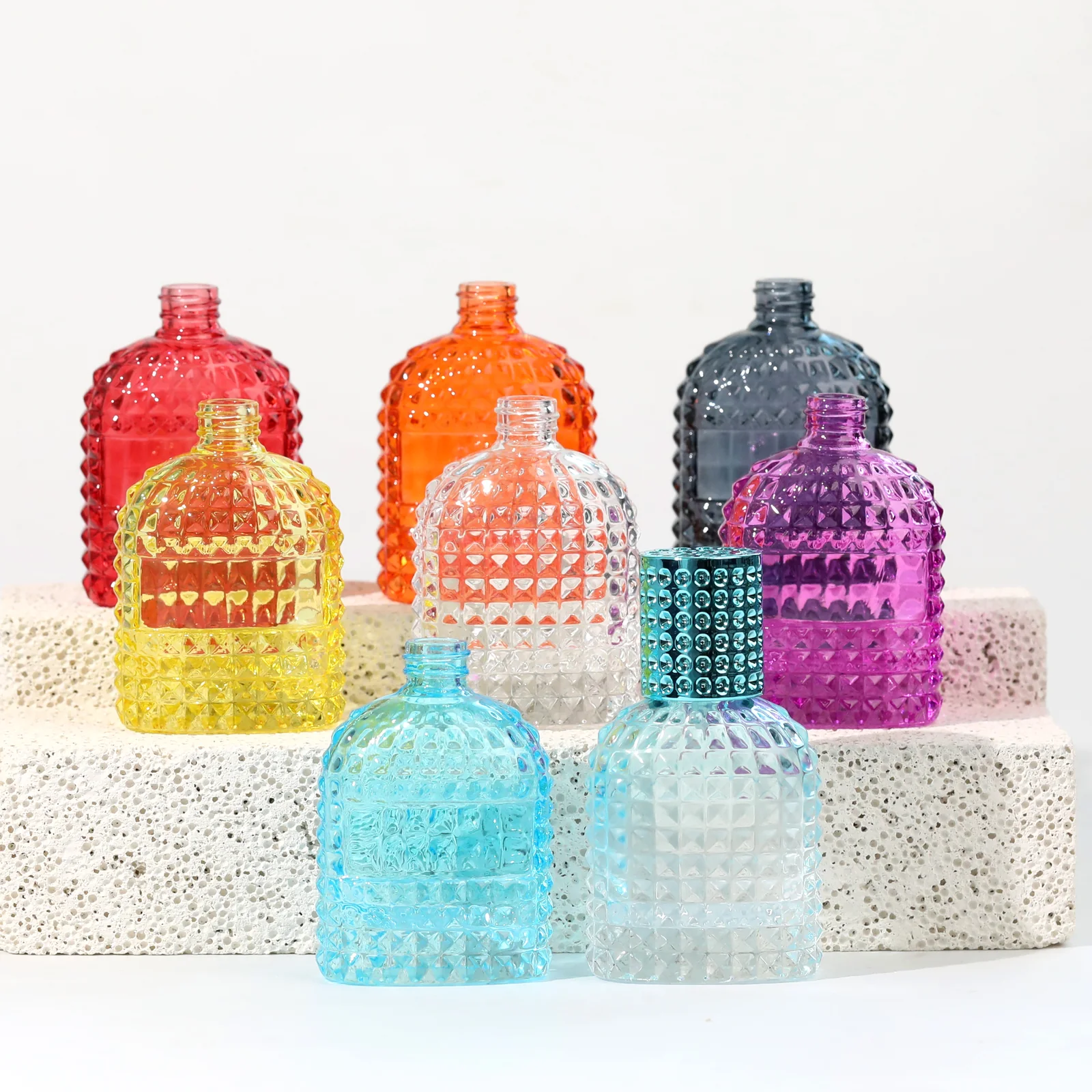
Scope and source boundary
This article explains the two neck systems at a decision level: what they are, how they behave on a filling line, and which questions close the gap between a style photo and a fillable, sealable package. It does not publish Tengyao neck drawings. For any quoted model, request the current neck-finish drawing and the matched pump and collar list in writing.
1. What the two systems actually are
A crimp-neck bottle carries a smooth neck ring. During filling, the pump is placed on the neck and a crimping head folds a thin metal collar under the ring, locking the pump permanently in place. The result is a clean, seamless look: no visible thread, an uninterrupted silhouette, and a closure the end user cannot remove.
A screw-neck bottle carries a molded thread on the neck. The pump screws on with a defined torque and can be removed again. The thread is usually hidden under a cap or a decorative collar, but the construction allows refilling, component replacement and simpler line setup.
| Decision factor | Crimp neck | Screw neck |
|---|---|---|
| Seal behavior | Permanent crimp; tamper evidence by construction | Torque-controlled; depends on liner and process discipline |
| Filling equipment | Needs a crimping station matched to the neck ring | Needs torque control; simpler tooling changeovers |
| Refillability | Not designed for consumer refill | Refillable by construction |
| Component flexibility | Pump and collar locked at assembly | Pump can be swapped or serviced |
| Visual result | Seamless, no visible thread | Thread hidden under cap or collar |
| Typical positioning | Prestige fine fragrance | Refill programs, travel formats, flexible production |
2. Filling line and equipment implications
The neck decision is really a filling-line decision. Crimping requires a crimping head matched to the specific neck ring diameter and collar design; once set up, it runs fast and consistently, but a wrong crimp is scrap. If you fill at a contract manufacturer, confirm they already run the neck standard you are buying, or budget for tooling.
Screw necks need calibrated torque control instead of a crimping head. Under-torqued pumps loosen in transit; over-torqued pumps stress the thread or the liner. Either failure shows up as leakage claims weeks later. Specify the target torque range in the approval record and test it on the exact assembled bottle, pump and liner combination.
- Ask the filler which neck standards their lines already support.
- Match the collar or pump supplier to the neck drawing, not to a photo.
- Record crimp settings or torque values in the signed sample approval.
3. Seal integrity and leakage control
A crimped closure fails silently when the collar is folded unevenly, the neck ring has chips, or the gasket is wrong for the formula. A screwed closure fails when torque drifts, the liner compresses permanently, or the thread finish is inconsistent. Both systems pass or fail at the assembled-package level, which is why leakage testing must use the real bottle, pump, collar or liner, and formula together.
Define the test before approval: storage orientation, temperature cycle, duration and acceptance rule. A bottle that survives a week upright may still leak after a month inverted in a hot container. The packaging buying guide shows how to write method, condition and acceptance into the order-control record.
4. Refillability and the travel-format connection
Refillable positioning is strongest where the closure can be opened without damage, which favors screw necks in full-size bottles. But most consumer refill behavior actually happens in small portable formats, where the user decants or refills a travel atomizer instead of opening the retail bottle. That is the design logic behind aluminum perfume bottles: pull-cap and bottom-fill formats built for repeated personal use.
If your line plan includes refills, decide where the refill happens - at the retail bottle or in a travel companion - and specify the neck system accordingly. Mixing the two stories in one product creates a package that does neither job well.
5. Component flexibility and decoration
Crimp systems reward early commitment: because the pump and collar are locked at assembly, the collar finish, actuator style and cap must be finalized before filling. Screw systems tolerate later component changes, which helps brands that iterate actuators or run multiple cap designs on one bottle body.
Decoration interacts with the neck too. A heavy metallic collar can carry the visual identity of a crimped prestige bottle, as on the mountain-base perfume bottle, while a natural-material cap shifts the closure story entirely, as on the wood-cap square perfume bottle. In both cases the visible cap and the hidden neck construction are separate decisions that must be specified on separate RFQ lines.
6. Decision checklist
- Confirm where filling happens and which neck standards that line already runs.
- Decide whether the product story requires refillability or a permanent prestige seal.
- Request the neck-finish drawing and matched pump, collar and liner list for the exact model.
- Approve the assembled sample with recorded crimp settings or torque values.
- Write the leakage test method, orientation, duration and acceptance rule into the order record.
7. What to confirm in a Tengyao quotation
Styles in the glass perfume bottles category are shown with cap and pump directions, but neck construction is confirmed per model at quotation stage. Ask for the neck-finish type and drawing, the matched component list, the filling equipment assumption, and the leakage-test plan as four separate written answers before comparing prices between crimp and screw options.
Specify the neck before the cap
Shortlist a bottle style, choose the neck system that matches your filling line, then record every component in a structured RFQ brief so the quotation covers the complete closure system.